When considering outdoor furniture, many people wonder about material choices. Humid climates pose unique challenges for furniture longevity. Often, wood is praised for its aesthetic appeal. However, in these conditions, wood can warp, crack, and rot. This leads to a significant question: Why is aluminum furniture more durable than wood in humid climates?
Aluminum offers a remarkable resistance to moisture. Unlike wood, it does not absorb water. This means aluminum maintains its integrity over time. It is also lightweight, making it easy to move or rearrange. Moreover, aluminum requires minimal maintenance compared to wooden counterparts. A simple wipe-down is usually enough to keep it looking new. The finish of aluminum can resist rust and corrosion, extending its life significantly.
In contrast, wooden furniture may need regular sealing or treatments to maintain its quality. This can be time-consuming and may not always yield perfect results. Some consumers find themselves frustrated with frequent repair needs. Overall, aluminum furniture stands out as a practical solution in humid environments. It balances durability and low maintenance, making it a wise investment for any outdoor space.
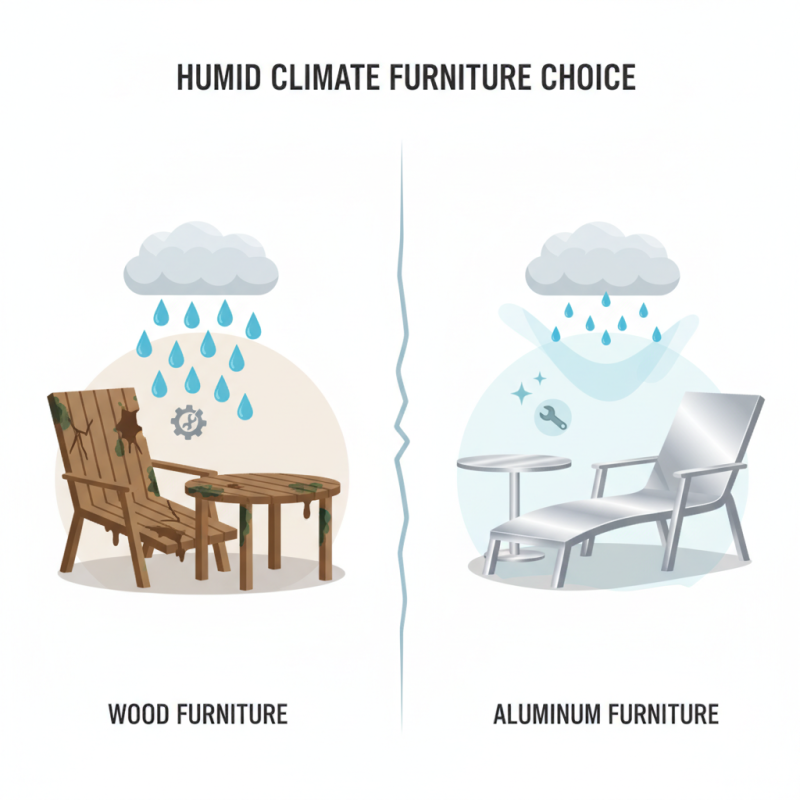
Benefits of Aluminum Furniture in Humid Climates: An Overview
Aluminum furniture stands out in humid climates for several reasons. Unlike wood, aluminum resists corrosion and does not warp when exposed to moisture. This durability means that your furniture will last longer, staying intact through heavy rain or high humidity. The lightweight nature of aluminum also allows for easy rearrangement, perfect for outdoor spaces that are constantly changing.
Moreover, aluminum furniture requires minimal maintenance. There's no need for regular varnishing or sealing, unlike wood, which can succumb to mold and mildew. A simple wipe down with soap and water keeps it looking fresh. Aluminum doesn’t absorb moisture, which helps prevent the buildup of harmful bacteria.
Yet, some might find the aesthetics of aluminum less appealing than wood’s warmth. It’s a fair point to consider. However, modern designs now offer various styles and finishes, bridging that gap. Reflecting on both materials reveals trade-offs. While wood has a timeless appeal, aluminum's practical benefits in humid climates often outweigh the sentimental value of traditional surfaces.
Durability Comparison: Aluminum vs. Wood in Humidity-Driven Environments
When considering furniture for humid climates, the choice often narrows to aluminum or wood.
Aluminum furniture stands out due to its resistance to moisture. It does not warp like wood, which can expand and crack over time. This durability makes aluminum a practical option for outdoor settings. Its lightweight nature also allows for easy rearrangement as needed, offering versatility.
Wood, while aesthetically pleasing, poses significant challenges in humid environments. It can harbor mold and mildew, impacting not only its visual appeal but also its lifespan.
With constant exposure to moisture, wood requires regular maintenance. This can involve sealing, sanding, and refinishing.
These tasks can be both time-consuming and costly.
Aluminum, on the other hand, is often easier to clean and maintain. A simple wipe-down with a damp cloth keeps it looking new. Its resistance to rust and corrosion ensures that it endures through harsh weather conditions. While it may lack the warmth of wood, the practicality of aluminum in humid climates is undeniable. Understanding these differences is essential when making a choice.
Maintenance Requirements: Easier Upkeep for Aluminum Furniture
In humid climates, maintaining furniture can be quite challenging. Aluminum furniture stands out due to its lower maintenance requirements compared to wood. Unlike wood, aluminum is resistant to moisture, which prevents warping, cracking, and rotting. A report from the American Society for Testing and Materials indicates that aluminum can endure high humidity without compromising its structural integrity.
Cleaning aluminum furniture is straightforward. A simple wash with soap and water can remove dirt and grime. This quick upkeep is a significant advantage over wood, which may require special cleaners and protective coatings to fight mold and mildew. Regular maintenance is vital for both materials, but the effort needed for aluminum is considerably less.
**Tips:** While aluminum is low-maintenance, it's still crucial to check for scratches or dents regularly. These can accumulate and affect the aesthetic appeal. Additionally, applying a protective finish every few years can enhance its durability and appearance.
Wood, while beautiful, demands more attention. Sealing and refinishing are often needed to keep it safe from the elements. This commitment may not be ideal for everyone, particularly in climates where humidity is consistently high. Thus, aluminum furniture can be a more reliable choice, offering durability alongside ease of care.
Why Choose Aluminum Furniture Over Wood in Humid Climates? - Maintenance Requirements: Easier Upkeep for Aluminum Furniture
| Feature |
Aluminum Furniture |
Wood Furniture |
| Resistance to Moisture |
High - does not rust or warp |
Low - prone to swelling and decay |
| Maintenance Frequency |
Low - occasional cleaning |
High - requires regular sealing and painting |
| Cleaning Requirements |
Simple soap and water |
Specific wood cleaners or oils needed |
| Durability |
Very durable and long-lasting |
Can rot or splinter over time |
| Weight |
Lightweight and easy to move |
Heavier and more difficult to relocate |
| Environmental Impact |
Recyclable materials available |
Sourced from trees, impacts forests |
Environmental Impact: Sustainable Sourcing of Aluminum vs. Wood
When choosing furniture in humid climates, environmental considerations are crucial. Aluminum furniture stands out due to its sustainable sourcing. Unlike wood, aluminum can be recycled indefinitely without losing quality. This characteristic significantly reduces waste. Sustainable aluminum production often involves less habitat destruction compared to logging. Forests, once cut, take decades to regenerate. Aluminum mining, while problematic, does not have the same long-term impact on ecosystems.
Wood requires careful management. Overharvesting can lead to deforestation and biodiversity loss. In humid areas, moisture can warp and rot wooden furniture, necessitating more resources for replacement. Poorly sourced wood exacerbates environmental issues. On the other hand, aluminum, when sourced responsibly, contributes to a circular economy. Businesses increasingly opt for sources that adhere to strict environmental guidelines. Still, the energy-intensive process of aluminum production poses questions about emissions. It's essential to weigh these factors while considering the overall sustainability of your furniture choices.
Environmental Impact: Aluminum vs. Wood in Humid Climates
Cost Analysis: Long-Term Savings with Aluminum Furniture Choices
Many homeowners in humid climates face durability issues with wood furniture. The constant moisture can lead to warping, rot, and insect infestations. In contrast, aluminum furniture offers a practical solution. According to a report from the Furniture Industry Association, aluminum pieces can last 20 years or more, significantly outpacing wood in lifespan. This durability translates into lower costs over time, as fewer replacements are needed.
The initial investment in aluminum furniture may be higher, but long-term savings are evident. A study by the Home Improvement Research Institute reveals that maintenance costs for wooden furniture can accumulate to over $500 annually. Aluminum, being resistant to moisture and corrosion, requires minimal upkeep. It does not need regular sealing or refinishing, which fluctuates with the climate.
However, transitioning to aluminum isn’t without its challenges. Some consumers are hesitant about the aesthetic differences when compared to traditional wood. It's essential to weigh the visual appeal against long-term practicality. Many find it worthwhile over time, especially with the stability and strength aluminum provides. So, for those living in humid areas, aluminum becomes a more economical choice.
FAQS
: Aluminum furniture is moisture-resistant, preventing issues like warping and cracking. It requires simple cleaning with soap and water.
Regular checks for scratches or dents are essential. Accumulated damage can affect its appearance over time.
Yes, aluminum can be recycled indefinitely, reducing waste. Sustainable sourcing has less impact on habitats than logging.
Aluminum pieces can last over 20 years, leading to lower replacement costs. Maintenance expenses for wood can exceed $500 annually.
While generally low-maintenance, applying a protective finish every few years can enhance durability and appearance.
Some find aluminum less appealing than wood. However, many appreciate aluminum’s stability and strength over time.
Conclusion
In humid climates, aluminum furniture offers several advantages over traditional wood options. One of the key benefits is its durability; aluminum is naturally resistant to moisture, corrosion, and rot, making it a more reliable choice. Why is aluminum furniture more durable than wood in humid climates? Unlike wood, which can warp or decay when exposed to high humidity, aluminum maintains its form and structural integrity, ensuring longevity and resilience even in challenging conditions.
Additionally, aluminum furniture requires significantly less maintenance compared to wood. While wood often needs regular sealing and treatment to combat humidity damage, aluminum simply needs occasional cleaning to keep it looking its best. Furthermore, sourcing aluminum can be more sustainable than obtaining wood, and the cost analysis shows that investing in aluminum can lead to long-term savings due to its durability and low upkeep needs. Overall, choosing aluminum furniture in humid climates results in a practical, cost-effective, and environmentally friendly solution.

 Ramsey Furniture