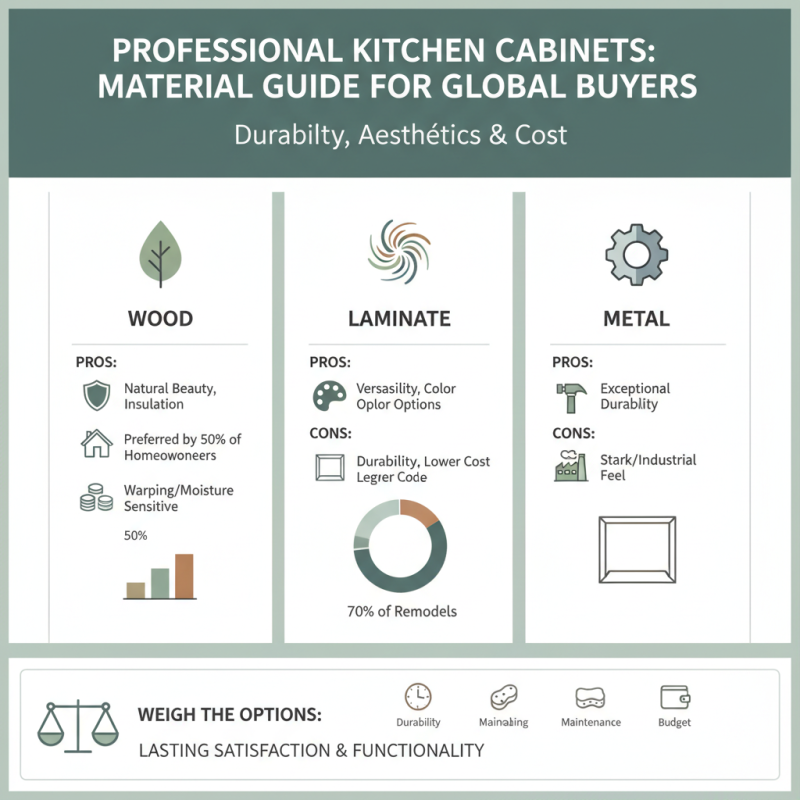
In the quest for high-quality professional kitchen cabinets, buyers often ask, "Which material is best for professional kitchen cabinets?" The decision is critical. A recent industry report suggests that 70% of kitchen remodels involved cabinetry upgrades. Thus, selecting the right material can influence overall functionality and aesthetic appeal.
Wood, laminate, and metal are popular choices. Wood offers natural beauty and insulation. Studies show it's preferred by 50% of homeowners. However, it can be expensive and prone to warping. Laminate provides versatility and durability at a lower cost. Yet, it may lack the elegance some professionals seek. Metal, often used in commercial settings, offers exceptional durability but can feel stark in residential spaces.
It's essential to weigh the pros and cons of each material. Durability, maintenance, and budget will greatly affect the decision. A kitchen cabinet should not only look good but also withstand daily wear. Choosing wisely is vital for lasting satisfaction and functionality.
When selecting materials for professional kitchen cabinets, durability and functionality are paramount. High-quality wood, such as oak or maple, offers strength and a classic look. These woods are resistant to warping, making them suitable for high-use environments. On the other hand, engineered materials like plywood can provide stability while being more cost-effective. The balance between aesthetics and performance is crucial.
Stainless steel is another option often favored for its modern appeal. It's easy to clean and resists heat and moisture, which are common in kitchen settings. However, fingerprint marks can be an issue, requiring regular maintenance to keep surfaces looking pristine. Similarly, laminate surfaces can mimic the look of wood or stone. They are affordable but may not hold up as well over time. Evaluating these characteristics ensures kitchens remain functional while reflecting personal style.
Every choice has its trade-offs. The benefits of solid wood come with a higher price tag. Conversely, budget-friendly options may sacrifice longevity. It's important to consider how often cabinets will be used. Knowing the needs of a professional kitchen can guide material selection. Each material's performance must be weighed against potential drawbacks, leading to thoughtful decisions in cabinet design.
| Material Type | Durability | Maintenance | Cost | Aesthetic Appeal |
|---|---|---|---|---|
| Plywood | High | Low | Moderate | Versatile |
| MDF (Medium-Density Fiberboard) | Moderate | Medium | Low | Smooth Finish |
| Solid Wood | Very High | High | High | Elegant |
| Particle Board | Low | High | Very Low | Basic |
| Laminate | Moderate | Low | Moderate | Wide Range |
: High-quality wood like oak or maple is strong and resistant to warping. Engineered materials like plywood are cost-effective.
Stainless steel is modern, easy to clean, and resists heat and moisture. However, it can show fingerprints and requires maintenance.
Laminate mimics wood or stone, but it may not withstand heavy use over time. Longevity can be a concern.
Assess the kitchen's daily use. For busy kitchens, durability is crucial. Consider moisture and heat exposure when selecting materials.
Yes, hybrid options combining wood and laminate can enhance functionality and style. Balance aesthetics and durability for best results.
Light colors can create a spacious feel, while dark hues add sophistication. Misalignment in colors can disrupt the overall design theme.
Prioritize layout alongside material decisions. Clunky designs can hinder efficiency in busy kitchens. Flexibility in design can also help.
Wood requires sealing to protect against moisture damage. Regular maintenance is essential to keep them looking good.
Higher quality wood comes with a higher price tag, while budget options may lack durability. Each choice has its compromises.
Efficient layouts allow for better workflow. Poor designs can slow down operations, especially in high-traffic areas.
When considering "Which material is best for professional kitchen cabinets?" it is essential to evaluate the key characteristics of materials commonly used in commercial kitchens. Popular options include stainless steel, laminate, solid wood, and thermoplastic, each with its own set of advantages and disadvantages. For example, while stainless steel offers durability and easy maintenance, solid wood provides a classic aesthetic but may require more upkeep.
In addition to material properties, several factors should be considered when selecting cabinets for commercial kitchens, including the working environment, budget constraints, and design preferences. Current global trends indicate a growing preference for sustainable materials, emphasizing the need for professionals to stay informed about innovations in cabinet materials. Ultimately, the best choice will align with the specific needs and operational demands of a professional kitchen.

 Ramsey Furniture