How Long Are Bulk Furniture Lead Times from China?

Time:2026-11-10 Author:Madeline
0%

Bulk furniture lead times from China rarely fit into one neat number. A factory may quote 45 days, yet that clock often starts only after drawings, finishes, samples, and deposits are approved. For a standard dining chair, production might take six to ten weeks. A custom sofa with new fabric, foam, and packaging can take longer. Then come inspection, port handling, and ocean transit, which may add several weeks.

So, What are the lead times for bulk furniture manufacturing? China manufacturing consultant Renaud Anjoran offers a useful reminder: “A production schedule is only as dependable as the inputs behind it.” Buyers should treat that as a planning principle, not a guaranteed delivery date. Confirm whether the factory’s estimate includes material procurement, sample approval, production, quality checks, and shipment preparation. Ask for milestone dates, not just a final week number.

Small details can shift the calendar. A fabric color that fails approval, a revised carton size, or a delayed hardware component may pause production. Keep approved samples and specifications in writing, and ask the supplier to flag risks early. Build extra time into the plan, especially around major holidays and peak shipping periods. It may feel overly cautious. Still, a realistic schedule is usually more useful than an optimistic promise.
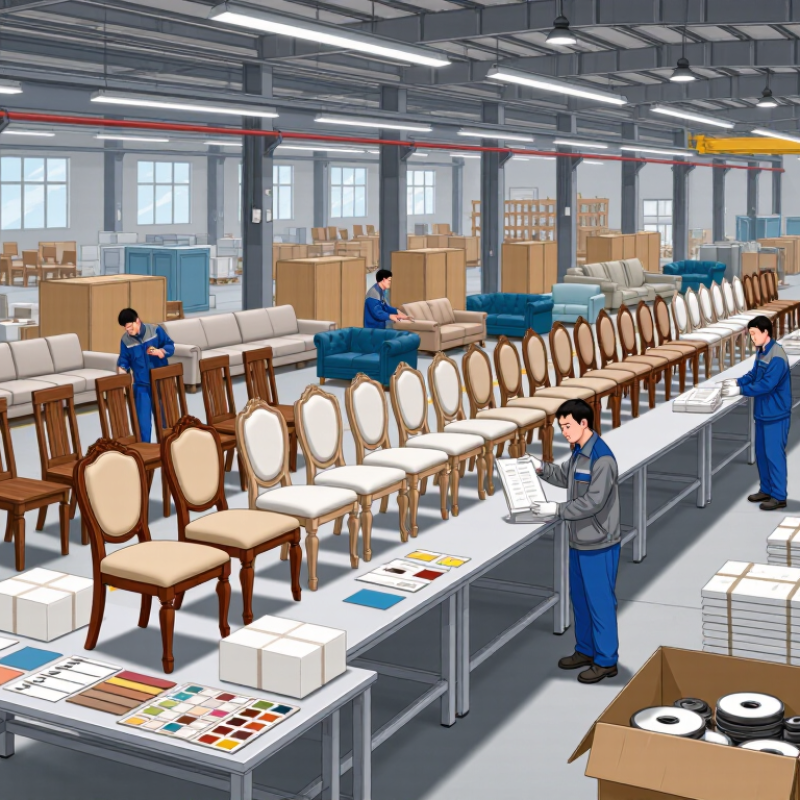
How Long Are Bulk Furniture Lead Times from China?

What Bulk Furniture Lead Time from China Includes

A bulk furniture lead time from China covers more than factory production. It may begin after the deposit, approved drawings, and material choices are confirmed. Ask the supplier where its clock starts. Some count from order confirmation; others wait for sample approval. Fabric color, wood finish, dimensions, and hardware can all affect the schedule. Small details matter.

Production includes cutting, assembly, finishing, and upholstery, followed by inspection and packing. A dining chair, for example, may need frame checks, a finish inspection, and carton testing before it is ready to ship. If a sample or inspection reveals a defect, rework can add days or longer. That happens. A tidy timeline can look reassuring, but it may leave little room for corrections.

Clarify whether the quoted lead time ends when goods leave the factory or includes delivery to the port and ocean transit. Port handling, vessel availability, and customs processing can extend the overall journey. These steps are not always included in factory estimates. Request a schedule with separate milestones, such as sample approval, production completion, inspection, and shipping handover. Then compare it with your launch date and leave a buffer. It is easy to underestimate that gap.

The Main Stages of a Bulk Furniture Order

A bulk furniture order moves through several stages, and each needs a clear handoff. The process usually begins with drawings, materials, dimensions, and a finished sample. A buyer should check joinery, fabric shade, finish, and carton protection before approving production. Small detail, big delay. If a sample changes late, the factory may need to revise materials or reset its production schedule.

Production follows approval and material preparation. For planning, many buyers allow roughly 30–60 days, but this is an estimate, not a promise. Custom finishes, mixed product lines, and peak-season capacity can extend it. In-process checks catch problems earlier than a final inspection. A neat spreadsheet can still be wrong if it omits rework or inspection time. Leave room for that.

After inspection, furniture is packed, loaded, and shipped. The World Bank’s 2023 Container Port Performance Index assessed 405 ports using vessel time in port, showing why port handling belongs in the timeline. UNCTAD’s Review of Maritime Transport 2024 reported that seaborne trade grew 2.4% in 2023; ocean transport remains a major link in delivery planning. Then comes transit. Allow extra time for booking, port congestion, customs processing, and inland delivery, and confirm the route and current sailing schedule with the forwarder. A realistic order calendar separates factory lead time from door-to-door lead time.

Typical Lead Times by Production and Shipping Stage

For bulk furniture orders from China, plan on 6–10 weeks from approved specifications to factory-ready cargo. These are planning ranges, not guarantees. Sample approval often takes 5–10 business days; sourcing wood, foam, fabric, or hardware can add 1–3 weeks. Standard production commonly needs 3–6 weeks, followed by 3–7 days for inspection, packing, and loading. A late fabric approval can quietly reset the schedule. Custom finishes and mixed product lines usually add time, even when the order quantity is large.

Shipping adds another stage. Port-to-port ocean transit is often about 2–4 weeks to the US West Coast, and longer to other destinations; allow extra time for booking, port handling, customs, and inland delivery. Sea-Intelligence’s Global Liner Performance report put carrier schedule reliability at 55.5% in 2024, so a vessel’s published arrival date should not be treated as a firm delivery date. UNCTAD’s Review of Maritime Transport 2024 reported maritime trade growth of 2.4% in 2023 and forecast 2.4% growth for 2024, a reminder that changing volumes can pressure capacity. Build at least 1–2 weeks of buffer into the plan. Not guaranteed. I would still confirm each milestone against the factory’s actual production calendar.

Factors That Can Shorten or Extend Delivery

Bulk furniture lead times from China depend on more than factory workload. A repeat order using standard materials may move faster than a custom run with new dimensions, finishes, or hardware. Confirm fabric, wood, foam, and packaging specifications early; a late sample approval can pause production. Clear drawings help, too. One measurement change can affect cutting, assembly, and carton sizes. Small changes matter.

Factory capacity and order size also shape the schedule. A large order may need several production lines, while peak seasons can make those lines harder to reserve. Ask for separate estimates for sampling, manufacturing, inspection, and shipping. Sea transit is not the same as factory lead time. Port congestion, vessel availability, and inland delivery can add days or weeks after production ends. A pre-shipment inspection may catch defects before goods leave, but repairs can push the booking back. Build in a buffer. Even careful planning cannot remove every delay, and a neat spreadsheet can give a false sense of certainty. Share a realistic delivery window with your supplier, then check progress against agreed milestones rather than relying on one optimistic date.

How Long Are Bulk Furniture Lead Times from China? - Factors That Can Shorten or Extend Delivery
Lead-Time Factor Typical Planning Range What Can Shorten the Schedule What Can Extend the Schedule Typical Schedule Effect
Production after specifications are approved About 30–60 days for many standard bulk orders Repeat designs, confirmed specifications, available materials, and an open factory slot New designs, multiple product types, custom finishes, or production backlogs Often the largest variable: several days to a few weeks
Product complexity and customization Simple, established items generally require less production time than custom-built pieces Standard dimensions, hardware, upholstery, and finishes Custom tooling, special joinery, complex upholstery, or made-to-order finishes Custom work may add 1–4 weeks or more
Samples, drawings, and approvals Depends on how quickly samples and specifications are reviewed Complete drawings, consolidated feedback, and prompt written approval Repeated sample revisions, late changes, or unclear specifications Approval delays can add days or several weeks
Material availability Varies by wood, board, fabric, foam, metal, and finish requirements Using materials already available to the manufacturer and approving substitutions early Special-order materials, seasonal shortages, or delayed imported components May add 1–3 weeks, depending on the material
Order quantity and production capacity Small and large orders can follow different production plans Flexible delivery batches and a production slot reserved in advance Peak-season congestion, unusually large quantities, or limited production lines A busy production calendar may add 1–4 weeks
Quality inspection and rework Inspection is usually scheduled near the end of production Clear quality standards, in-process checks, and early identification of defects Failed inspections, repairs, replacement parts, or a repeat inspection Allow several days; rework can add 1–2 weeks or more
Packaging, consolidation, and container booking Often takes several days after goods are ready, depending on shipment planning Packaging instructions confirmed early and a container booking arranged ahead of time Waiting to consolidate products, missed vessel cutoffs, or limited container space A missed sailing may add about 1–2 weeks
Ocean freight and destination Roughly 15–25 days to many West Coast North American ports and 25–40 days to many East Coast North American or European ports Direct sailings, flexible port selection, and early booking Transshipment, port congestion, weather disruption, or schedule changes Transit time depends strongly on route and sailing schedule
Customs clearance and final delivery Allow additional time after the vessel arrives Accurate paperwork, prompt payment of charges, and a pre-arranged delivery appointment Document corrections, customs examination, port congestion, or limited trucking availability Often several days; disruptions can add longer delays
Overall planning estimate: For a standard bulk order, allow about 30–60 days for production, plus roughly 15–40 days for ocean transit and additional time for port handling and final delivery. A practical door-to-door planning window is often around 7–16 weeks after specifications are approved. These are indicative ranges, not guaranteed delivery dates; product, route, shipping terms, and seasonal conditions all matter. Factors are not additive in every shipment.

How to Estimate a Realistic Arrival Date

A realistic arrival date starts with the production schedule, not the purchase-order date. Ask the supplier when materials are ready and when production will actually begin. For bulk furniture, manufacturing may take several weeks, especially when items need custom finishes, upholstery, or multiple quality checks. Request milestone dates for production completion, inspection, packing, and port delivery. A calendar date without these checkpoints is only a guess.

After production, allow time for inspection, export handling, ocean freight, customs clearance, and delivery to your warehouse. Transit time depends on the Chinese port, destination, sailing schedule, and season. Port congestion or a missed vessel can add days or weeks. That is not arrival. Ask the freight provider for a current route estimate, then add a buffer of at least one to two weeks for handoffs and routine delays. For example, if cargo is expected to reach the destination port in late September, warehouse delivery may fall in October. Confirm whether the quoted date means port arrival or final delivery; they are not the same. Dates still move. Even careful schedules can be wrong, so share a delivery window internally rather than promising one fixed day.

How Long Are Bulk Furniture Lead Times from China?

Estimated calendar days from order confirmation to delivery at your facility

For planning, allow about 95 calendar days in a typical scenario. The estimate includes production, export handling, ocean transit, port and customs processing, and inland delivery. Transit times vary by destination; confirm the schedule with your supplier and freight forwarder, and add extra time for custom specifications, peak seasons, or disruptions.

FAQS

When does the furniture lead-time clock usually start?

It may start after the deposit, approved drawings, and material choices are confirmed. Ask which event starts the supplier’s schedule.

What can affect production time?

Custom finishes, fabric colors, dimensions, hardware, and upholstery can change the schedule. Small details matter.

What happens during furniture production?

Production may include cutting, assembly, finishing, upholstery, inspection, and packing. A dining chair may need frame and carton checks.

Can a defect delay the order?

Yes. A failed sample or inspection can require rework, adding days or longer. I would leave room for this; neat schedules can be too optimistic.

Does the quoted lead time include ocean shipping?

Not always. It may end when goods leave the factory, rather than at port arrival or warehouse delivery.

Which milestones should I request?

Ask for dates covering sample approval, production completion, inspection, packing, and port delivery. A single calendar date is only a guess.

How much buffer should I allow after production?

Allow time for export handling, ocean freight, customs processing, and warehouse delivery. A buffer of at least one to two weeks can help.

Why can the warehouse arrival date change?

Vessel availability, port congestion, missed sailings, and handoffs can cause delays. Dates still move. Confirm whether an estimate means port arrival or final delivery.

Conclusion

Planning a bulk furniture order from China requires more than counting factory production days. The total lead time typically includes confirming specifications and samples, sourcing materials, scheduling production, conducting quality checks, preparing the shipment, and transporting it to the destination. Each stage contributes to the arrival date, so it is important to clarify when the timeline begins and whether it includes shipping and customs processing.

What are the lead times for bulk furniture manufacturing? The answer depends on factors such as order size, design complexity, material availability, factory capacity, inspection requirements, and shipping method. Standard products with readily available materials may move faster, while custom designs or busy production periods can add time. To estimate a realistic arrival date, ask for a stage-by-stage schedule, confirm key milestones in writing, and allow a practical buffer for production changes or transit delays.

Madeline

Madeline

Madeline is a dedicated marketing professional with a wealth of expertise in our company's core offerings. With a keen understanding of the industry, she brings a unique perspective to her role, consistently delivering high-quality content that highlights the superior aspects of our products. As......