A minimalist living room is not an empty room. It is a space where every piece earns its place. A low-profile sofa, a warm oak coffee table, and one carefully chosen lamp can create comfort without visual clutter. The challenge is proportion: oversized furniture can crowd a small room, while too many tiny pieces can make it feel unsettled. How to match living room furniture with a minimalist interior? Start with the room’s real needs, then consider scale, material, color, and daily use.
The decisions matter, and they can be costly. Houzz’s 2024 U.S. Houzz & Home Study reported a median renovation spend of $24,000 in 2023. That figure covers renovations broadly, not minimalist furniture alone, but it is a useful reminder to plan purchases carefully. IKEA’s Life at Home Report 2024 drew on research across 39 countries, offering a broad view of how people experience their homes. Still, reports cannot tell you whether a particular sofa suits your room. Measure the doorway, test the fabric, and notice how daylight changes a finish. Small details count.
Marie Kondo, organizing consultant and author, wrote, “The question of what you want to own is actually the question of how you want to live your life.” Let that idea guide furniture choices, not dictate them. Minimalism can feel cold when comfort gets overlooked. A textured rug or a well-used reading chair may belong. The aim is clarity, not perfection.
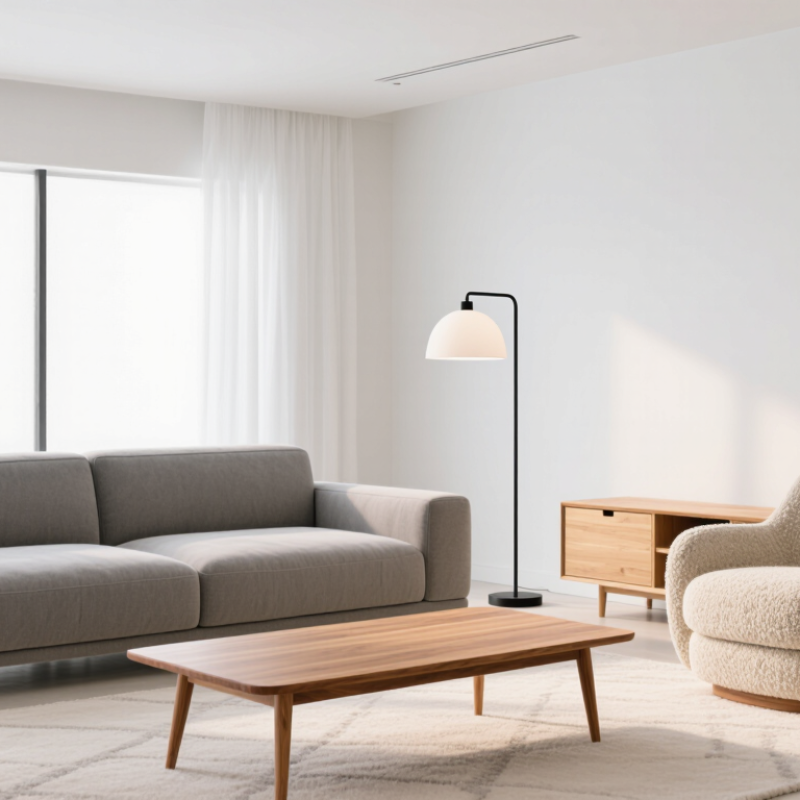
Begin with the room, not the sofa. Measure each wall, doorway, and window, then note where doors swing and sunlight falls. A compact floor plan can reveal why a deep sectional blocks the route to the balcony. Aim to keep roughly 30 to 36 inches clear along the main walkway, adjusting for the room and household. Measure twice. Tape furniture outlines onto the floor before buying; it is an imperfect test, but it catches awkward proportions.
Match furniture to the people and routines using the room. The U.S. Census Bureau’s 2019–2023 American Community Survey reports an average household size of 2.53 people. That national figure is only a starting point: a home with children, guests, or pets may need more flexible seating and stain-tolerant fabrics. Count the seats used on an ordinary evening, not just during gatherings. Real life intrudes.
Plan for comfortable access, too. AARP’s 2024 Home and Community Preferences Survey found that 75% of adults aged 50 and older want to remain in their homes as they age. In a living room, that makes stable chairs, reachable side tables, and uncluttered paths practical choices—not merely styling details. Low furniture may look calm, yet it can be difficult to rise from. Test the seat height in person, and be willing to revise the plan.
Choose one minimalist direction before selecting furniture. Soft minimalism suits pale oak, rounded edges, and woven textures; a sharper, architectural look pairs better with slim black frames and crisp silhouettes. Keep the room’s main pieces consistent, but avoid making every surface identical. A little contrast gives the eye somewhere to rest.
For a 2026-ready palette, build around warm ivory, mushroom, or sandy beige, then add one muted accent such as olive, dusty blue, or clay. Use the accent on a cushion, a ceramic lamp, or one upholstered chair—not everywhere. Natural light changes these shades noticeably. Test fabric and paint samples beside the sofa in both morning and evening light. Small test, big difference.
A common snag is choosing a cool gray palette for a north-facing room; it can feel stark beside white walls. Warmer neutrals may soften that effect, though they can look yellow under some bulbs. Check the undertone in your actual room. Repeat wood tones or metal finishes once or twice, rather than matching every detail. Leave some space empty. Minimalist rooms need breathing room, but an overly sparse layout can feel unfinished; a textured rug or low side table can restore balance.
Choose a minimalist style and a 2026-ready color palette
Build a calm palette with warm ivory as the dominant background, muted sage for larger furniture, and terracotta as a small accent. The 60–30–10 split is a commonly used interior-design guideline, not a measured 2026 consumer survey.
Minimalist living rooms depend on proportion, not simply on having fewer things. Start with the room’s largest piece, often the sofa, and let its scale guide nearby furniture. A low sofa pairs well with a coffee table of similar visual weight, while a bulky table can make the seating area feel crowded. Leave roughly 14 to 18 inches between the sofa and table for comfortable movement.
Keep forms simple, but vary them gently. A rectangular sofa, round side table, and slim floor lamp can create contrast without visual clutter. Check how pieces look from the doorway, not only from the seat. Leave clear space around furniture so the room feels open and easy to navigate. Small rooms benefit from raised legs and narrow profiles; larger rooms can handle deeper seating or a substantial rug. Details matter.
Use a consistent palette, then introduce texture through a woven rug, matte ceramic, or visible wood grain. These surfaces add warmth without relying on extra ornament. Matching every finish can look oddly staged. I’ve found that one slightly imperfect pairing, such as a rounded table beside a square sofa, can make a restrained room feel more lived-in. Test the arrangement with paper outlines or painter’s tape before moving heavy pieces. Simple forms work best when their sizes, spacing, and everyday use feel considered.
In 2026, a minimalist living room feels considered when its materials work together without matching exactly. Start with one dominant surface, such as pale oak flooring or a warm stone coffee table. Then repeat its undertone elsewhere. A walnut frame beside honey-toned oak can look accidentally mismatched, even when both pieces are beautiful. Check samples in morning and evening light; finishes often shift noticeably across the day.
Balance smooth and tactile surfaces. Pair a low, matte wood cabinet with a softly woven wool rug, or place a brushed metal lamp near a linen sofa. Keep the palette restrained, but vary the texture so the room does not feel sterile. Small differences matter. A glossy tabletop may reflect window light, while a honed finish keeps the same shape quieter. Leave a few centimeters between furniture pieces where practical, so their outlines remain clear. It is tempting to coordinate every finish, but that can make a room feel like a showroom. A slight mismatch may add character; still, check whether it looks intentional from the doorway, not just up close.
| Furniture or Design Role | Material Combination | Texture Contrast | Finish Coordination | Suggested Palette | Practical Consideration |
|---|---|---|---|---|---|
| Sofa and main seating | Woven linen or cotton upholstery with a solid wood or metal frame | Pair a softly textured fabric with smooth, simple frame lines | Choose a matte or low-sheen fabric; keep exposed wood natural or lightly finished | Warm white, oatmeal, soft gray, or muted olive | Removable covers can simplify cleaning. Check the care label before washing, as fabrics may shrink or require specific care. |
| Coffee table | Solid wood, wood veneer, or stone paired with a restrained metal detail | Balance a smooth tabletop with a tactile rug or upholstered seating | Use a matte wood finish or honed stone to reduce glare; coordinate metal accents rather than mixing many finishes | Natural oak, walnut, warm gray, or soft charcoal | Wood can be marked by standing water and heat. Use coasters and follow the finish maker’s care instructions. |
| Area rug | Wool, cotton, or a durable synthetic fiber, selected for the room’s use | Use a low-pile weave beneath furniture with smoother surfaces; add a subtle loop or flatwoven texture | Keep the surface mostly matte and the pattern quiet so it does not compete with furniture | Sand, cream, stone, or a restrained tonal pattern | Wool is resilient but may shed, particularly when new. Follow the rug’s cleaning guidance and use a suitable rug pad. |
| Sideboard or storage | Wood veneer or solid wood with discreet metal hardware | Combine a continuous, calm cabinet front with a woven basket or ceramic object nearby | Repeat the room’s wood tone; choose brushed or matte hardware for a softer appearance | Natural wood, warm white, or muted taupe | Veneer is a thin wood surface, so avoid abrasive cleaners and excess moisture that can damage the finish. |
| Lighting and accents | Powder-coated metal, glass, ceramic, or paper shades | Contrast a smooth metal base with a softly diffused shade or handmade ceramic surface | Repeat one metal finish in a few places; use clear, frosted, or opal glass according to the desired light diffusion | Black, aged-looking brass tones, cream, or clear glass | Use bulbs compatible with the fixture’s stated type and maximum wattage. Keep fabric and paper shades away from heat sources. |
| Whole-room coordination | Limit the main mix to wood, upholstery, and one or two accent materials | Vary texture while keeping the number of prominent patterns low | Repeat each major finish at least twice, such as a wood tone on furniture and a small accessory | Build around one neutral base, one natural tone, and one restrained accent color | Test material samples in the room’s daylight and evening lighting; colors and surface sheen can look different under different light sources. |
Arrange minimalist living room furniture around movement, not symmetry.
Keep the sofa’s front legs on a rug, then leave a clear route from the doorway to the seating area. A narrow side table can hold a book and a glass without crowding the walkway.
Leave breathing room.
Before buying, tape furniture dimensions onto the floor; this simple test reveals whether a coffee table blocks knees or a chair interrupts the path. Aim for roughly 14–18 inches between sofa and coffee table, then adjust for how people actually sit and reach.
Scale matters more than having fewer objects.
A small sofa can look lost beneath a large blank wall, while an oversized sectional can swallow the room. The 2024 U.S. Houzz & Home Study reported a $24,000 median renovation spend in 2023 across renovating homeowners—not living rooms alone. That broader figure is a useful reminder to measure carefully before committing money to replacements.
Choose a few related finishes, such as pale oak, warm white, and textured linen, and repeat them gently rather than matching every piece. Test the layout.
I still find that a perfectly aligned arrangement can feel stiff; shifting one chair slightly toward the window often makes conversation easier.
Revisit the setup after a week, especially where sunlight, door swings, and daily clutter change how the room works.
Soft minimalism pairs pale oak, rounded edges, and woven textures. An architectural look suits slim black frames and crisp shapes. Choose one direction, but allow some contrast.
Start with warm ivory, mushroom, or sandy beige. Add muted olive, dusty blue, or clay on one cushion or chair. A small accent is enough.
Place samples beside the sofa and check them in morning and evening light. Natural light changes colors. Bulbs can shift warm neutrals toward yellow, so test them in your actual room.
Keep a clear route from the doorway to the seating area. Set the sofa’s front legs on a rug, and use a narrow side table where space is tight.
Aim for about 14–18 inches, then test the reach from the seat. Tape the table’s dimensions onto the floor first. It may still feel awkward.
Compare each piece with the room and nearby walls. A small sofa can look lost beneath a large blank wall, while an oversized sectional can dominate the space.
No. Leave some surfaces empty, but use a textured rug or low side table if the room feels unfinished. Breathing room matters.
No. Repeat wood tones or metal finishes once or twice, and keep a few finishes related. Shift a chair slightly toward the window if conversation feels stiff. Recheck the layout after a week.
Matching minimalist living room furniture in 2026 begins with understanding the room itself. Measure the space, note its natural light and walkways, and consider how the room is used each day. These details help you choose pieces that fit comfortably without crowding the floor plan. Set a clear style direction and build a current, calming palette around a few complementary colors rather than adding unnecessary visual variety.
How to match living room furniture with a minimalist interior? Choose furniture with balanced proportions, clean shapes, and practical functions, then bring warmth through a thoughtful mix of materials and textures. For example, smooth surfaces can be softened with woven details or natural-looking finishes. Arrange each piece to support conversation and easy movement, leaving enough open space to make the room feel calm. Finally, refine the layout by removing items that do not serve a purpose, keeping comfort and visual clarity at the center of the design.

Ramsey Furniture